
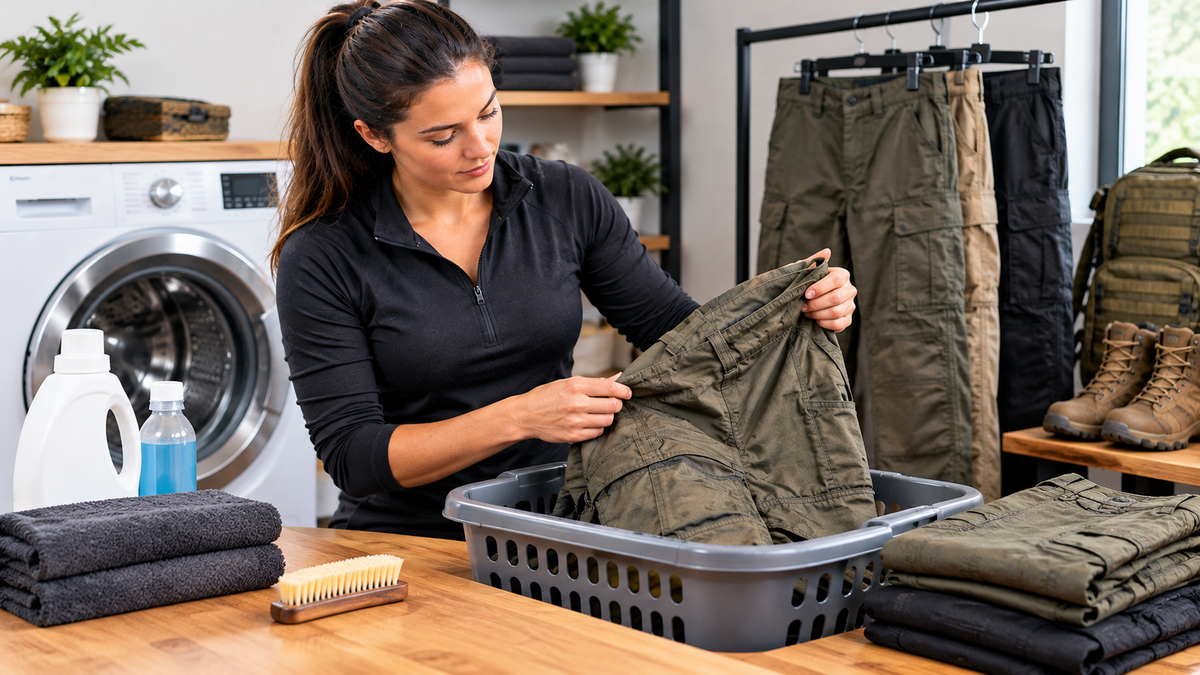
To make women's tactical pants last, wash them inside out in cold water with a mild detergent, skip bleach and fabric softener, dry them on low heat and treat stains before they go in the machine. Cold water and low heat protect the stretch fibers, the water-repellent finish and the fit, which are the parts that wear out first.
Duty pants go through more in a week than most clothes do in a year: kneeling on pavement, long hours in a vehicle, rain, mud, coffee and sometimes worse. Good care keeps them fitting the way they did on day one. At MGT Gear, we build tactical pants for women who work hard in them, and this guide covers a simple routine for washing, drying, stains and repairs.
Always Start With the Care Label
The care label is the final word for any pair, because fabric blends and finishes differ between brands. Most women's tactical pants use a polyester-cotton ripstop with a few percent of spandex, and most share the same basic needs: cold water, gentle detergent and low heat.
For MGT Gear's Women's Tactical Pants, the label reads: machine wash cold, machine dry low, do not bleach and iron warm. The rest of this guide follows that routine.
How to Wash Women's Tactical Pants: Step by Step
Follow this routine after every few wears, or after any shift that leaves them dirty or sweaty:
1:-Empty every pocket. Tactical pants have a lot of pockets, and they hide pens, gloves and receipts. A forgotten pen can ruin a whole load.
2:-Brush off dried mud and debris. Let caked mud dry, then knock it off outside so grit does not grind into the fabric in the wash.
3:-Pretreat stains. Work on stains before washing, while they are still fresh if you can (see the stain table below).
4:-Close zippers, snaps and flaps. This stops hardware from snagging other clothes or the pants themselves.
5:-Turn the pants inside out. This reduces surface abrasion and helps the color last longer.
6:-Wash in cold water with a mild detergent. Cold water protects spandex and helps prevent shrinkage and fading. Wash with similar colors.
7:-Skip bleach and fabric softener. Bleach can weaken fibers and fade color, and softener can coat the fabric and reduce water repellency.
Can You Put Tactical Pants in the Dryer?
Yes, if the label allows it, but use a low heat setting and remove the pants promptly. High heat is hard on spandex and elastic, which can lose their stretch over time, and it can encourage cotton to shrink. Line drying is the gentlest option when you have time.
Should You Iron Tactical Pants?
Usually not, if you take them out of the dryer promptly and hang them. When you want a sharper look for court, an inspection or a ceremony, use a warm iron, not hot, and avoid ironing directly over printed logos or reflective details.
How to Remove Common Stains From Tactical Pants
The fastest fix for any stain is to treat it early and avoid heat until it is gone, because heat can set stains permanently. Consumer NZ's stain removal guide recommends rinsing in cold water unless directed otherwise, since hot water sets some stains, and notes that enzyme-based detergents work well on protein stains such as blood.
|
Stain |
What to do |
|
Blood (fresh) |
Rinse from the back of the fabric with cold water, then work in an enzyme detergent and wash cold. Never use hot water first. |
|
Blood (dried) |
Soak in cold water, apply an enzyme pretreatment, wait, then wash cold. Repeat if needed before drying. |
|
Mud |
Let it dry, brush off as much as possible, pretreat the remaining mark with liquid detergent, then wash. |
|
Grease and oil |
Blot, apply liquid dish soap or a degreasing pretreatment, let it sit, then wash as the label directs. |
|
Coffee and food |
Rinse with cold water, pretreat with liquid detergent and wash. |
|
Ink |
Dab with a stain remover or rubbing alcohol on a cloth, test on a hidden seam first, then wash. |
Always check that a stain is gone before drying. If it is still there, treat and wash again, since the dryer can lock it in.
Body Fluids and Contamination
Pants exposed to blood or other body fluids on the job are a safety issue, not just a laundry one. Follow your agency's decontamination and laundering policy, which may require department laundering or disposal. Water-repellent tactical pants are not protective equipment and do not protect against blood, body fluids or chemicals.
How to Keep the Water-Repellent Finish Working
A water-repellent finish makes light rain, spills and splashes bead up and roll off. It wears down over time with washing, abrasion and dirt, but good care slows that process.
1:-Keep the pants clean. Dirt and body oils reduce how well water beads up.
2:-Skip fabric softener. It can leave a coating that interferes with the finish.
3:-Use a mild detergent and rinse well. Detergent residue can also affect repellency.
4:-Follow the dryer setting on the label. MGT's water-repellent treatment is designed to perform for more than 100 washes when cared for as directed.
When water stops beading after years of use, a wash-in or spray-on water repellent made for synthetic blends can help. Test it on a hidden area first and follow the product directions.
How to Protect the Fit
Fit is what makes women's tactical pants worth buying, so protect it in the wash.
1:-Cold water and low heat help prevent shrinkage in the cotton and protect the spandex that lets the pants stretch through the hips and seat.
2:-Do not hang pants by the waistband for long periods when wet, which can stretch the elastic back.
3:-Rotate pairs. Giving each pair a day to rest and dry fully helps stretch fabric recover its shape.
4:-Hem with care. If you have your pants hemmed, wash them once first so any small shrinkage happens before the tailor measures. Our guide to choosing a 31-inch or 33-inch inseam covers length choices.
Simple Repairs That Add Months of Wear
Small problems are easy to fix early and expensive to ignore.
1:-Loose belt loops: restitch them as soon as you notice, before the fabric around them tears.
2:-Small tears: ripstop stops tears from spreading, but close the hole with a patch or iron-on repair on the inside so it does not grow.
3:-Worn knees: an internal patch adds life to pants that still fit well.
4:-Loose snaps or buttons: tighten or replace them so pockets stay secure.
5:-Frayed hems: trim loose threads and reinforce the edge, or have the pants rehemmed.
When to Replace Tactical Pants
Replace a pair when it can no longer do its job safely or meet your uniform standard. Signs include:
1:-Thin or worn-through fabric at the knees or seat
2:-Belt loops that pull loose again after repair
3:-Stretch that no longer recovers, so the pants sag by mid-shift
4:-Fading or staining past your agency's appearance standard
5:-A water-repellent finish that no longer works and does not respond to retreatment
Many people who wear duty pants daily keep several pairs in rotation, which spreads the wear and means one pair is always clean. Our guide to women's duty pants for law enforcement, EMS and fire covers more about choosing pants for daily duty.
You can browse replacement pairs in our women's duty pants collection.
Frequently Asked Questions
Do tactical pants shrink?
Polyester-cotton blends can shrink slightly, mainly in hot water or high dryer heat. Washing cold and drying low keeps shrinkage to a minimum.
How often should you wash duty pants?
Wash them after a dirty or sweaty shift, and otherwise after a few wears. Over-washing adds wear, but leaving dirt and sweat in the fabric breaks down fibers and the water-repellent finish.
Can I use bleach on tactical pants?
Not if the label says no bleach, as MGT's does. Bleach can weaken fibers, damage spandex and fade color. Use an enzyme detergent or an oxygen-based stain remover that the label allows instead.
Can I dry clean tactical pants?
It is rarely needed and can affect stretch fibers and finishes. Machine washing as the label directs is usually the best option.
Why do my tactical pants feel stiff after washing?
Detergent residue or line drying can leave fabric stiff. Use a little less detergent, add an extra rinse, or tumble on low for a few minutes before hanging.
Care That Keeps You Ready
A few habits make women's tactical pants last much longer: cold water, low heat, no bleach or softener, quick stain treatment and small repairs before they grow. Follow the label and your pants will keep their fit, stretch and finish through many shifts.When it is time for a new pair, MGT Gear's Women's Tactical Pants are built in stretch ripstop with simple care: machine wash cold, dry low. Eligible returns are accepted within 30 days, so you can check the fit before your next shift.

Leave a comment
This site is protected by hCaptcha and the hCaptcha Privacy Policy and Terms of Service apply.