
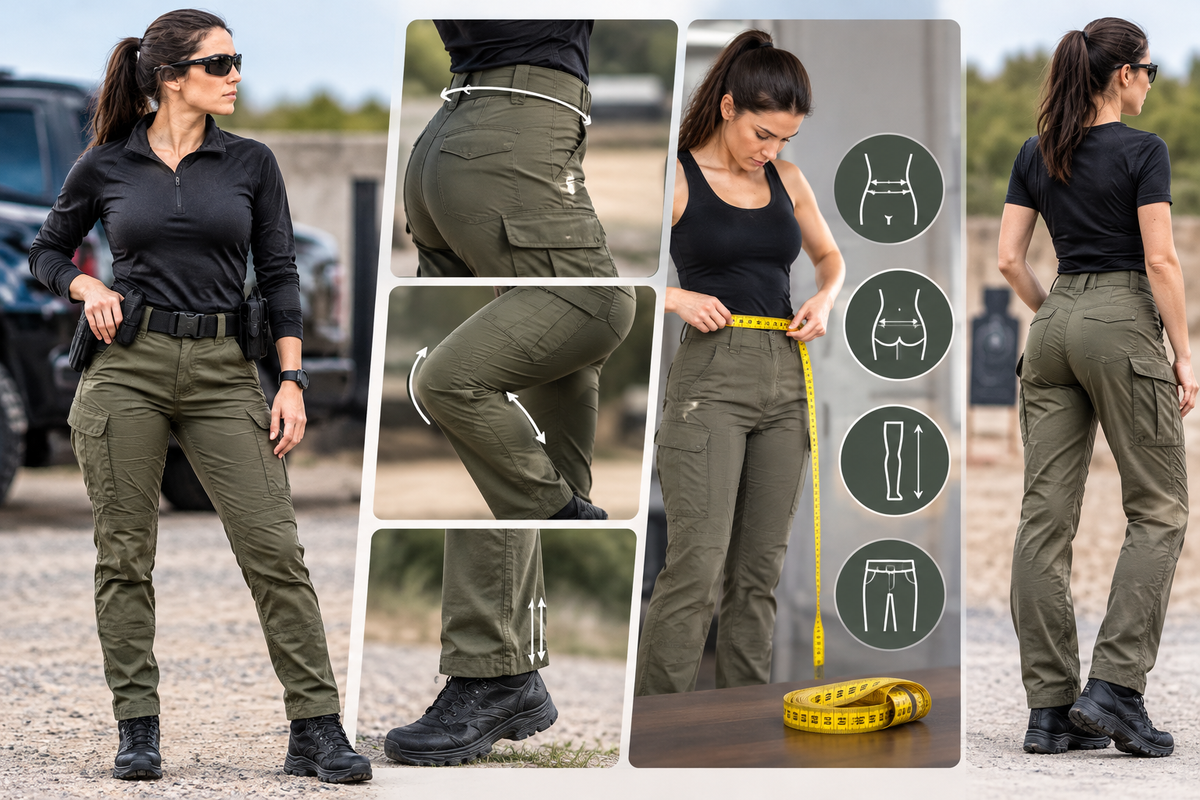
Women's tactical pants should fit your hips and seat without pulling, sit snug at the waist with no gap at the back, stay up when you squat, and break lightly on top of your boots. To find your size, measure your hips as well as your waist, then choose the size where both land, using the brand's own chart rather than your usual jeans size.
Most sizing advice starts and ends with the waist. That works for pants cut on a straight men's pattern, and it is the reason so many women end up sizing up for their hips and pinning a gap at the back. At MGT Gear, we pattern duty pants for women from the start, and this guide covers how a good fit should look and feel, and how to get your size right the first time.
Why Fit Matters More in Tactical Pants
Tactical pants carry a duty belt, tools and a full shift of kneeling, climbing and sitting, so a small fit problem becomes a big one by hour ten. A gap at the waist lets the belt slide. A tight seat restricts a squat. Pants that are too long catch on boots and steps.
Poor fit is also a documented problem for women in uniform. In a national survey of more than 20,000 police officers and staff in England and Wales, Lancaster University researchers found women reported uniform trousers as ill-fitting and restrictive through the hips, groin and upper thighs. Those are exactly the areas a women's pattern is built to fix.
How Should Women's Tactical Pants Fit? Area by Area
A good fit is snug where the pants anchor and roomy where you move. Use this table when you try a pair on:
|
Area |
Good fit |
Signs of a poor fit |
|
Waist |
Snug and level, no gap at the back |
Gap above the seat, waistband rolls or folds |
|
Rise |
Stays put when you squat or sit |
Back drops when you crouch; front digs in when seated |
|
Hips and seat |
Smooth fabric, room to lunge |
Pulling lines across the seat, front pockets flaring open |
|
Thighs |
Enough room to kneel and climb, pockets lie flat |
Fabric strains across the thigh when you squat |
|
Knees |
Knee shaping sits at your knee |
Fabric pulls tight over the knee or bunches behind it |
|
Length |
Hem rests lightly on your boot |
Hem drags under the heel or floats above the boot |
Waist: Snug, Level and No Gap
The waistband should sit level all the way around and feel secure without a belt. Slide two fingers into the back waistband: that should be roughly all the room there is. A larger gap means the pants were sized for your hips on a pattern with a straighter hip line, and a duty belt will slide down and tip your holster. We break down the causes in our post on why women's tactical pants gap at the waist.
Rise: Where the Pants Sit on Your Body
Rise is the distance from the crotch seam to the top of the waistband, and it decides where the pants sit. A mid-rise sits a little below the natural waist, which suits most duty belts and lets you sit in a vehicle without the waistband pressing into your stomach. An elastic back helps the waistband stay up when you bend and keeps your shirt tucked.
Hips, Seat and Thighs: Room to Move
This is where women's tactical pants differ most from men's. The seat should be smooth, with no horizontal pulling lines, and you should be able to drop into a deep squat or a kneeling position without the fabric straining. A stretch crotch panel or gusset adds movement without extra bulk.
Knees: Bend Without Binding
Articulated knees are pre-shaped to follow the bend of your leg. When you kneel, the shaping should sit at your knee, not above or below it. If it does not line up, the inseam or rise is probably wrong for your height.
Length: How Long Should Tactical Pants Be?
Tactical pants should be long enough that the hem rests lightly on the top of your duty boot when you stand, with no more than a small break. Too long and the hem frays under your heel; too short and it rides up when you kneel. Our post on choosing a 31-inch or 33-inch inseam walks through the choice.
How to Find Your Size in Women's Tactical Pants
Your size comes from three measurements and the brand's chart, not from the size on your favorite jeans. Follow these steps:
1:-Measure your natural waist. Wrap the tape around the narrowest part of your torso, level and snug, without pulling it tight. Stand naturally.
2:-Measure your hips. Wrap the tape around the fullest part of your hips and seat, keeping it level all the way around.
3:-Measure your inseam on a pair that fits. Lay a well-fitting pair of pants flat and measure the inside leg seam from the crotch to the hem. Think about the boots you will wear.
4:-Compare to the product's own chart. Match both waist and hip numbers. Sizes vary by brand and even by style within a brand.
5:-Read the brand's sizing notes. Look for guidance like "between sizes, size up" or how the fit compares to other brands.
For a detailed, step-by-step walkthrough, see our guide on how to measure yourself for women's tactical pants.
Body Measurements vs Garment Measurements
A size chart can list body measurements (your waist and hips) or garment measurements (the finished pants laid flat). Body charts tell you which size is built for your shape. Garment charts are useful for comparing against a pair you already own that fits well. Check which kind of chart it is before you compare numbers.
What If Your Waist and Hips Are Different Sizes?
Fit your hips first, because a waistband can be held snug but a tight seat cannot be fixed. If your waist falls in one size range and your hips in the next, choose the size that fits your hips, then check that the waistband stays snug.
This is where a women's pattern makes the difference. A pant drafted with more room through the hips, seat and thighs lets you fit your hips at your true size, so the waist does not gap. If the gap is still there in every size, the pattern is not built for your waist-to-hip ratio, and a different cut will serve you better than a smaller or larger size.
As an example, here is how MGT Gear's grouped size guide for its tactical pants lines up waist and hip body measurements:
|
MGT size |
Waist (in) |
Hips (in) |
|
2 to 4 |
26 to 28 |
36 to 38 |
|
6 to 8 |
29 to 31 |
39 to 41 |
|
10 to 12 |
32 to 34 |
42 to 44 |
|
14 to 16 |
35 to 37 |
45 to 47 |
|
18 |
38 to 40 |
48 to 50 |
If your measurements span two ranges, send your waist, hip and preferred inseam to MGT's support team for a personal size recommendation before you order.
Do the Movement Test Before You Commit
You cannot judge tactical pants standing still. Try them on with your boots, inner belt and duty belt, then load the pockets you use every shift and run through this test:
1:-Deep squat. The back waistband should stay up and the seat should not pull.
2:-Kneel on one knee. The knee shaping should sit at your knee, and the hem should not ride far above your boot.
3:-Sit for two minutes. The front rise should not dig into your stomach.
4:-Raise both arms overhead. Your shirt should stay tucked.
4:-Step up high. Lift a foot onto a chair or vehicle step. The thighs and crotch should move freely.
5:-Reach every pocket and your holster. Loaded cargo pockets should not sag or swing, and your draw should be clean.
If a pair passes all six, it fits. If it fails one, note which area failed and use the table above to decide if the fix is a different size, inseam or cut.
Frequently Asked Questions
Should tactical pants be tight or loose?
Neither. Tactical pants should be snug at the waist so they stay up under a duty belt, and roomy through the hips, seat and thighs so you can squat, kneel and climb without strain.
Should I size up or down in tactical pants?
Follow the brand's own note. Many brands, MGT Gear included, recommend sizing up when you fall between sizes. When switching brands, check the comparison guidance, since sizes do not match from one brand to the next.
How do I convert from men's tactical pants sizes?
Men's tactical pants are sized by waist and inseam in inches, while women's are usually sized by number. Do not convert by waist alone. Measure your waist and hips and use the women's chart, because a men's waist size does not account for hip room.
How do I know if my tactical pants are too small?
Pulling lines across the seat or thighs, front pockets that flare open, a waistband that digs in when you sit, or fabric that strains when you squat all mean the pants are too small in those areas.
Can tactical pants be hemmed?
Yes. Most tactical pants can be hemmed by a tailor. Hem them while wearing your duty boots so the length is right for work.
Find Your Fit With MGT Gear
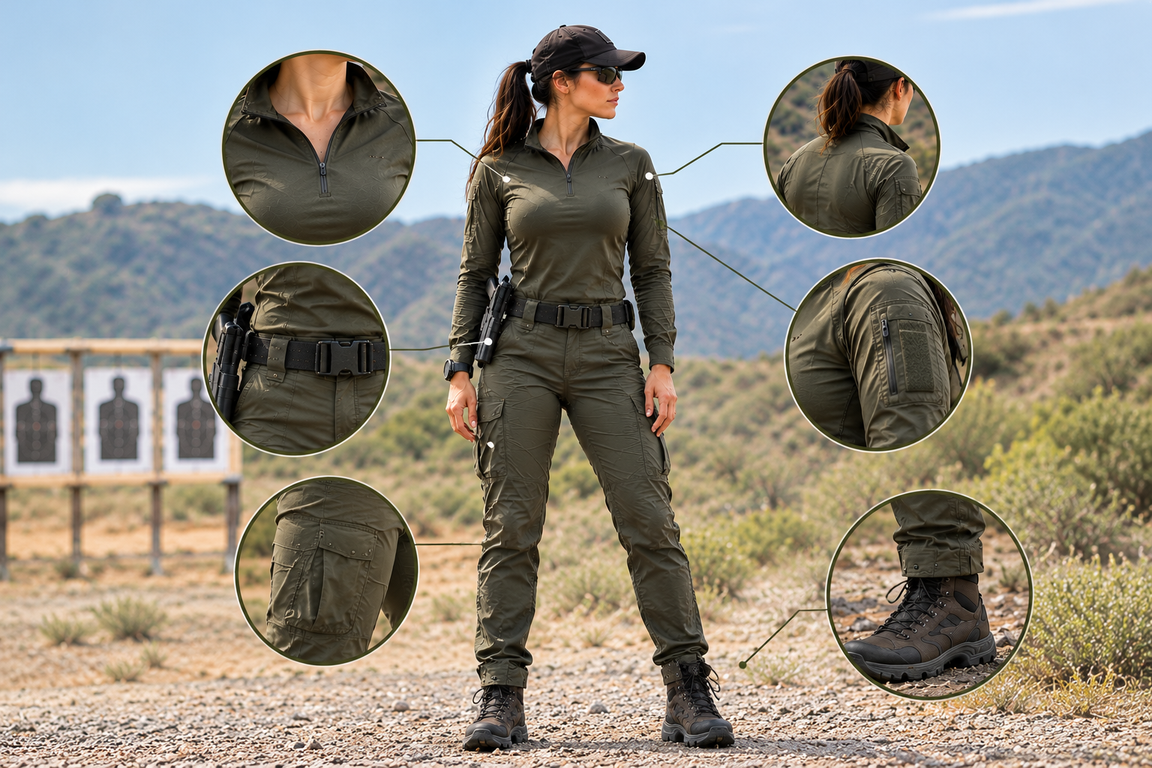
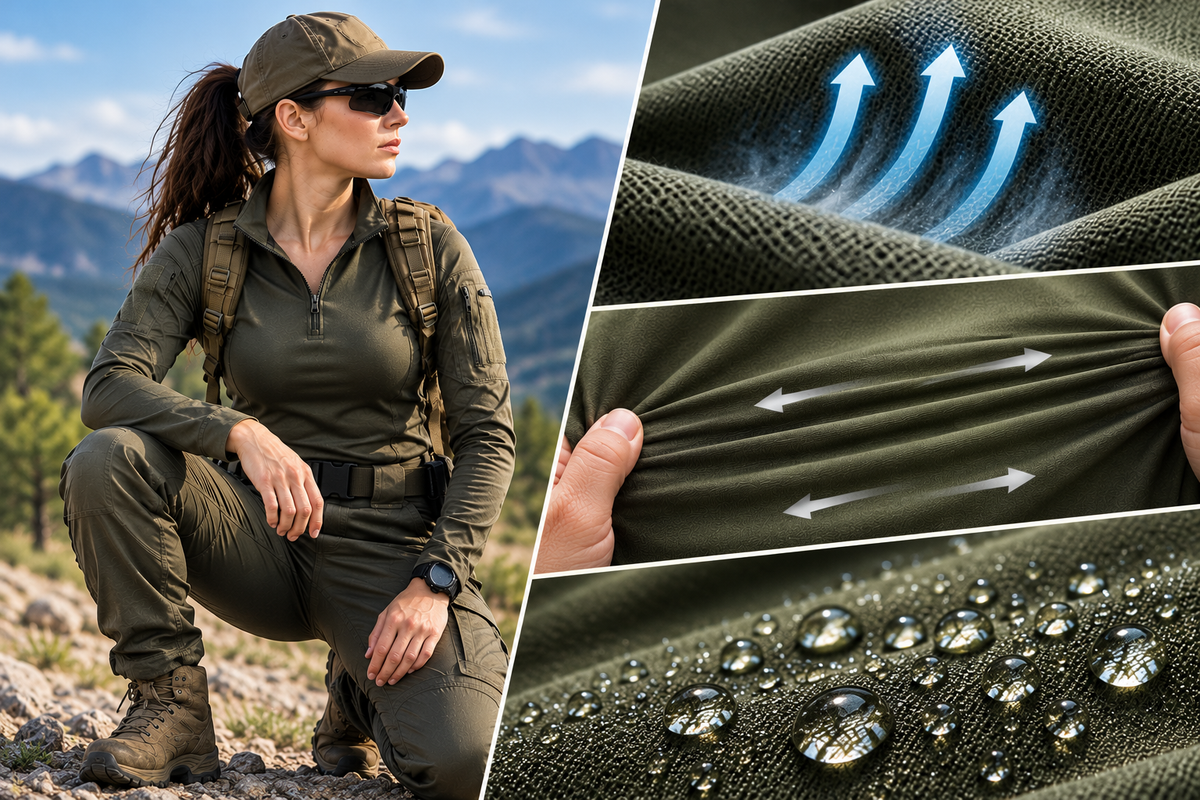
MGT Gear's Women's Tactical Pants and Workwear Pants share one women-first fit, so once you know your size in one, you know it in both. Both sit at mid-rise with an elastic back, with room through the hips, seat and thighs, in sizes 2 to 18 and Regular 31-inch or Long 33-inch inseams. You can compare both styles in our women's duty pants collection.
A few MGT-specific sizing notes:
1:-Coming from women's 5.11 Tactical? Size down 1 to 2 sizes from your usual 5.11 size.
2:-Between sizes? Choose the larger size.
3:-Shorter or taller than the inseam options? The hems can be tailored for your height.
4:-For reference: the model in the product photos is 5'6" and wears a size 8 in Regular 31-inch.

Leave a comment
This site is protected by hCaptcha and the hCaptcha Privacy Policy and Terms of Service apply.