
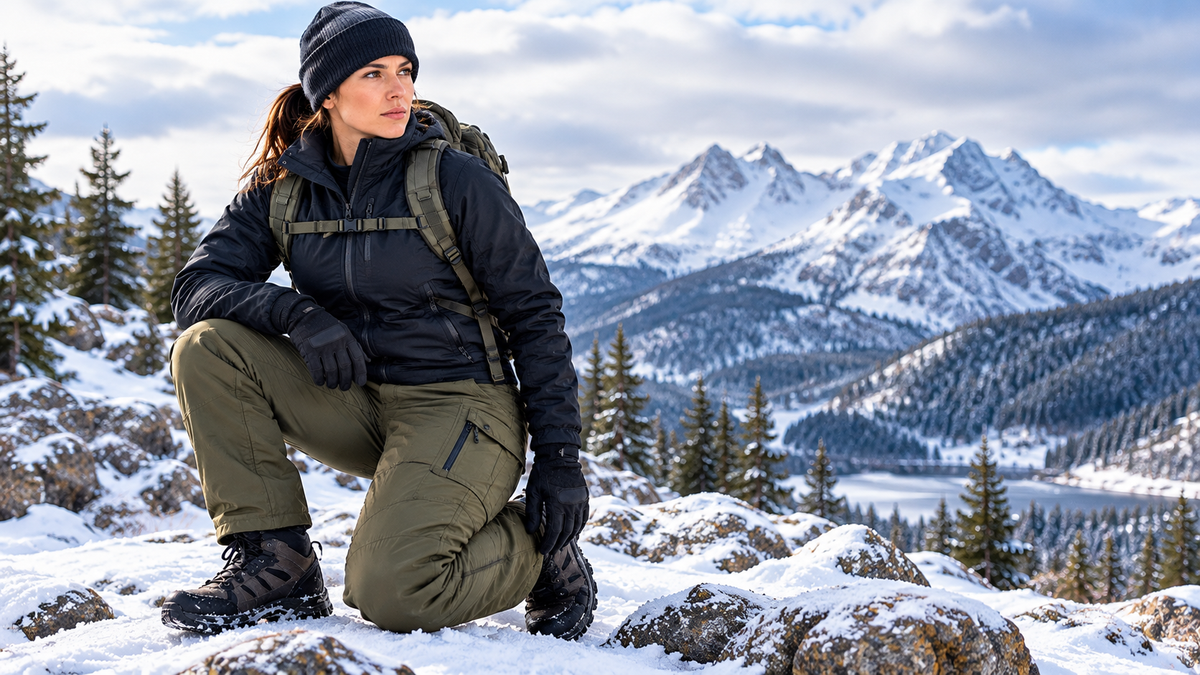
Waterproof or insulated women's tactical pants are worth it if you spend long stretches standing still in cold rain, snow or wind, such as traffic posts, outdoor security or winter fieldwork. For most duty roles that mix vehicle time, indoor calls and bursts of activity, a layering system works better: your regular tactical pants over a wicking base layer, with a waterproof shell pant for downpours.
Winter shifts are hard on clothing choices. A pant that keeps you warm at a 2 a.m. traffic stop can leave you sweating through a 20-minute call indoors. At MGT Gear, we design women's tactical pants for long, changing shifts, and this guide explains when a dedicated winter pant earns its place and when layering is the smarter buy.
Waterproof vs Water-Repellent vs Insulated: What Is the Difference?
These three terms describe very different pants, and mixing them up leads to cold, wet shifts.
|
Type |
What it does |
Strengths |
Trade-offs |
|
Water-repellent |
A surface finish makes water bead and roll off |
Breathable, light, fine for drizzle, splashes and wet grass |
Soaks through in sustained rain |
|
Waterproof |
A membrane or coating with sealed seams blocks water |
Stays dry in heavy rain and wet snow |
Less breathable, can trap sweat, often stiffer and louder |
|
Insulated |
Fleece lining or synthetic fill traps warm air |
Warm during static, cold exposure |
Bulky, can overheat during activity or indoors, slower to dry |
|
Softshell |
Stretchy, wind-resistant, often water-repellent |
Good mobility and breathability in cold, dry wind |
Not fully waterproof |
Most everyday tactical pants, including MGT Gear's, are water-repellent: they shed light rain and spills but are not waterproof and not insulated.
When a Dedicated Waterproof or Insulated Pant Is Worth It
A dedicated winter pant pays off when you are cold and still for long periods, or wet for hours. Consider one if you:
1:-Work long static posts outdoors, such as traffic control, perimeter security, gate duty or event security in winter.
2:-Spend hours in steady rain or wet snow, where a water-repellent finish will soak through.
3:-Work in severe cold with little chance to warm up indoors.
4:-Kneel in snow or slush often, where a waterproof seat and knees keep you dry.
In these cases, insulation and waterproofing do the job a layering system struggles with: keeping you warm and dry when your body is not producing much heat.
When Layering Works Better
Layering wins when your activity level and environment change throughout the shift. That describes most patrol, EMS, corrections and field roles, where you move between a heated vehicle, indoor calls and outdoor work.
The Appalachian Mountain Club describes a three-part layering system: a wicking base layer of synthetic or wool next to the skin, an insulating middle layer, and a waterproof, windproof outer shell. It also warns against cotton against the skin, because cotton holds moisture.
For duty pants, that translates to:
1:-Base layer: synthetic or merino leggings or long underwear under your tactical pants. This is where most of your warmth and moisture control comes from.
2:-Your everyday tactical pants: a durable, water-repellent outer layer you already know fits, with your duty belt and pockets where you expect them.
3:-Shell pants when needed: packable waterproof rain pants pulled on over everything for heavy rain or wet snow, then taken off when you go indoors.
The advantage is control. You can add or remove warmth without changing your whole uniform, and your duty belt, holster and pockets stay in the same place all winter.
Do Insulated Pants Work With a Duty Belt?
They can, but bulk is the main issue. Insulated pants are thicker at the waist and hips, which can push a duty belt outward, change your holster position and make pockets harder to reach. If you choose insulated pants for duty, try them on with your full belt and practice reaching everything you carry. A thin base layer under regular duty pants keeps your belt setup unchanged.
How Fit Changes in Cold Weather
Cold-weather layers change how your pants fit, especially for women.
1:-Room for a base layer: a thin base layer usually fits under women's tactical pants with stretch through the hips, seat and thighs. A thick fleece layer may not.
2:-Waistband: extra layers at the waist can make a snug waistband tight when you sit. A mid-rise with an elastic back helps.
3:-Length: winter boots are often taller or bulkier. Check that the hem still sits cleanly over your boot or tucks into gaiters.
4:-Mobility: stiff insulated pants restrict kneeling and climbing. Stretch fabric keeps you moving in layers.
If you are between sizes, measure with your base layer on and compare to the chart. Our guide on how to measure yourself for women's tactical pants walks through each step.
Small Habits That Make Winter Shifts Warmer
A few simple habits help any setup work better on cold days:
1:-Start slightly cool. If you feel warm standing in the station, you will likely sweat once you start moving, and damp layers chill you later.
2:-Keep a dry base layer in your bag or vehicle. Swapping a sweaty layer after a hard call makes the rest of the shift far more comfortable.
3:-Seal the gaps. A waistband that stays snug and a tucked shirt stop cold air from reaching your lower back, and gaiters or a hem tucked over boots keep snow out.
4:-Protect your knees. If you kneel on frozen ground often, knee pads or a waterproof sit pad keep cold and wet from soaking through at the knees.
A Quick Decision Guide
|
Your situation |
Best choice |
|
Patrol or EMS: in and out of vehicles, mixed indoor and outdoor |
Tactical pants + base layer; rain shell in the car |
|
Corrections: indoor shifts with yard duty |
Tactical pants + light base layer on cold days |
|
Outdoor security or traffic post, static for hours |
Insulated or softshell pant, or heavy base layer + shell |
|
Field work in steady rain or wet snow |
Waterproof pant or rain shell over tactical pants |
|
Search and rescue or active winter work |
Tactical or softshell pants + wicking base layer; shell in pack |
|
Mild, damp winters |
Water-repellent tactical pants + optional base layer |
Many women end up owning both: a dedicated winter or rain pant for the worst days, and a layering system for everything else.
How MGT Gear's Pants Fit Into a Winter System
MGT Gear's Women's Tactical Pants are built to be the middle piece of a cold-weather system, not a replacement for insulation or a rain shell.
1:-Water-repellent treatment designed to perform for more than 100 washes sheds drizzle, slush splashes and wet grass. It is not waterproof.
2:-Stretch ripstop with a 4-way stretch crotch panel keeps you mobile over a base layer.
3:-Room through the hips, seat and thighs leaves space for a thin base layer without sizing up.
4:-Mid-rise with an elastic back stays in place over layers and keeps your shirt tucked.
5:-Seven belt loops keep your duty belt where it always sits, whatever you wear underneath.
Because the fabric is a polyester-cotton blend, pair it with a synthetic or wool base layer rather than cotton long underwear, and add a waterproof shell for heavy rain. For your upper body, our HydraShield Quarter Zip is designed as an outer layer for changing conditions.
You can see our pants and layers together in the women's duty pants collection.
Frequently Asked Questions
Should I size up to wear a base layer under tactical pants?
Usually not for a thin base layer, especially in women's tactical pants with stretch through the hips and seat. For thick fleece layers, try the pants on with the layer before deciding.
Is cotton bad for cold weather?
Cotton holds moisture, so it is a poor choice next to your skin in the cold. A cotton-blend outer pant is fine over a synthetic or wool base layer, as long as you add a waterproof shell when it is wet.
Are fleece-lined tactical pants a good idea?
They are warm and comfortable for cold, static work, but they are bulkier, slower to dry and can overheat indoors. For changing activity levels, a separate base layer gives more control.
Can water-repellent pants handle snow?
They handle dry, light snow well, since it brushes off. Wet snow and slush will eventually soak through, so add a waterproof shell for long exposure.
How do I keep a water-repellent finish working in winter?
Keep the pants clean, skip fabric softener and follow the care label. Road salt and grime reduce how well water beads up.
Build a Winter Setup That Works Your Whole Shift
Dedicated waterproof or insulated pants are worth it for long, static, wet or very cold work. For most duty roles, a layering system built on pants you already trust gives better warmth control, comfort and access to your gear.Start with MGT Gear's Women's Tactical Pants, add a wicking base layer and a rain shell, and you are ready for most winter shifts. Eligible returns are accepted within 30 days, so you can test the fit over your base layer at home.

Leave a comment
This site is protected by hCaptcha and the hCaptcha Privacy Policy and Terms of Service apply.