
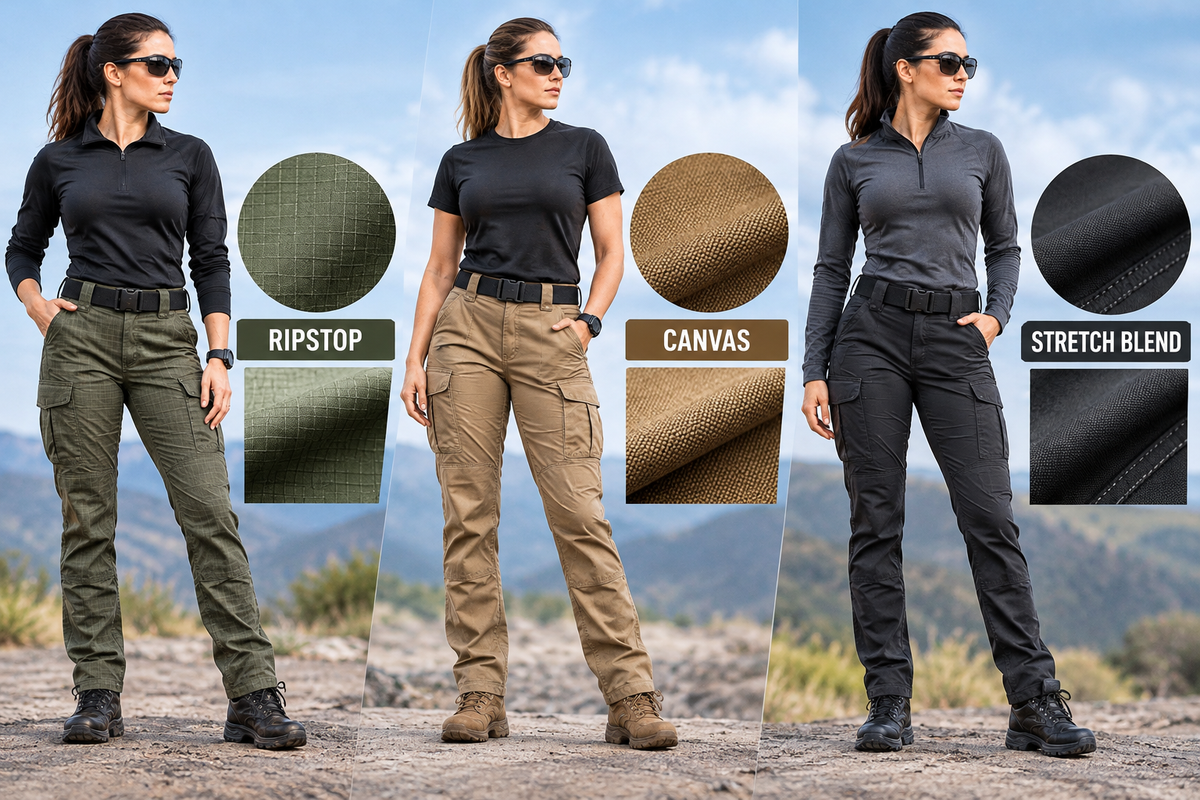
For most women in duty and field work, the best fabric for tactical pants is a stretch ripstop blend: a polyester-cotton ripstop with a small percentage of spandex. It resists tears, dries faster than cotton canvas, and moves through the hips, seat and thighs when you kneel, climb or sit in a vehicle. Canvas wins on raw abrasion resistance but runs hot, stiff and slow to dry.
Fabric is the part of a pair of tactical pants you notice every hour of a shift, even if you never think about it. It decides how hot you feel, how fast you dry after rain, whether the seat holds up to a patrol car, and whether the pants move with a woman's body or fight it. At MGT Gear, we build duty pants for women, and this guide compares the three fabric families you will see on every label.
Ripstop, Canvas and Stretch Blends Compared
Each fabric family trades durability, comfort and weight in a different way. Here is how they compare for duty use:
|
Factor |
Ripstop |
Canvas |
Stretch blend (ripstop or twill + spandex) |
|
Tear resistance |
High: grid stops tears spreading |
High through sheer thickness |
High when the base weave is ripstop |
|
Abrasion resistance |
Good |
Excellent |
Good |
|
Weight |
Light to mid |
Heavy |
Light to mid |
|
Breathability |
Good |
Low |
Good |
|
Drying time |
Fast in poly blends |
Slow |
Fast in poly blends |
|
Mobility |
Limited without stretch |
Stiff until broken in |
Best: gives at hips, seat, thighs and knees |
|
Best for |
Hot climates, active field work |
Cold weather, static or rough-surface work |
Most duty roles, long shifts, women's fit |
What Is Ripstop Fabric?
Ripstop is a woven fabric with thicker reinforcement yarns set into it at regular intervals, forming a small grid you can see on the surface. When something snags the fabric, those heavier yarns stop the tear from running. That lets ripstop stay relatively light while still holding up to fences, brush, stretcher rails and vehicle edges.
Ripstop describes the weave, not the fiber. You will see it in nylon, polyester, cotton and blends:
1:-Polyester-cotton ripstop: the most common choice for duty pants. Polyester adds strength, shape retention and faster drying; cotton adds breathability and a softer feel.
2:-Nylon or nylon-cotton (NyCo) ripstop: very strong and quick-drying, but can feel slick and make more noise when you move.
3:-Cotton ripstop: soft and breathable, but slower to dry and less durable than blends.
On its own, ripstop has little stretch. That is why many modern tactical pants pair a ripstop weave with spandex or mechanical stretch.
Is Canvas Good for Tactical Pants?
Canvas, often called cotton duck, is a heavy, tightly woven cotton. It is the most abrasion-resistant of the three, which is why it is popular for construction, mechanics and other work on rough surfaces.
The trade-offs matter on long duty shifts. Canvas is warm, stiff at first and needs breaking in. Heavy cotton also absorbs water and dries slowly, so a wet morning stays with you all shift. Some canvas pants add stretch or a water-repellent finish, which helps, but the fabric is still heavier than ripstop.
What Is a Stretch Blend?
A stretch blend adds give to a woven base fabric, either with a small percentage of spandex (also called elastane) or with mechanical stretch built into the yarn and weave. Even a few percent of spandex changes how the pants feel when you squat or step into a vehicle.
Where the stretch goes matters as much as how much there is:
1:-2-way stretch gives in one direction, usually across the body. It lets the pants expand when you bend or kneel while keeping their shape when you stand.
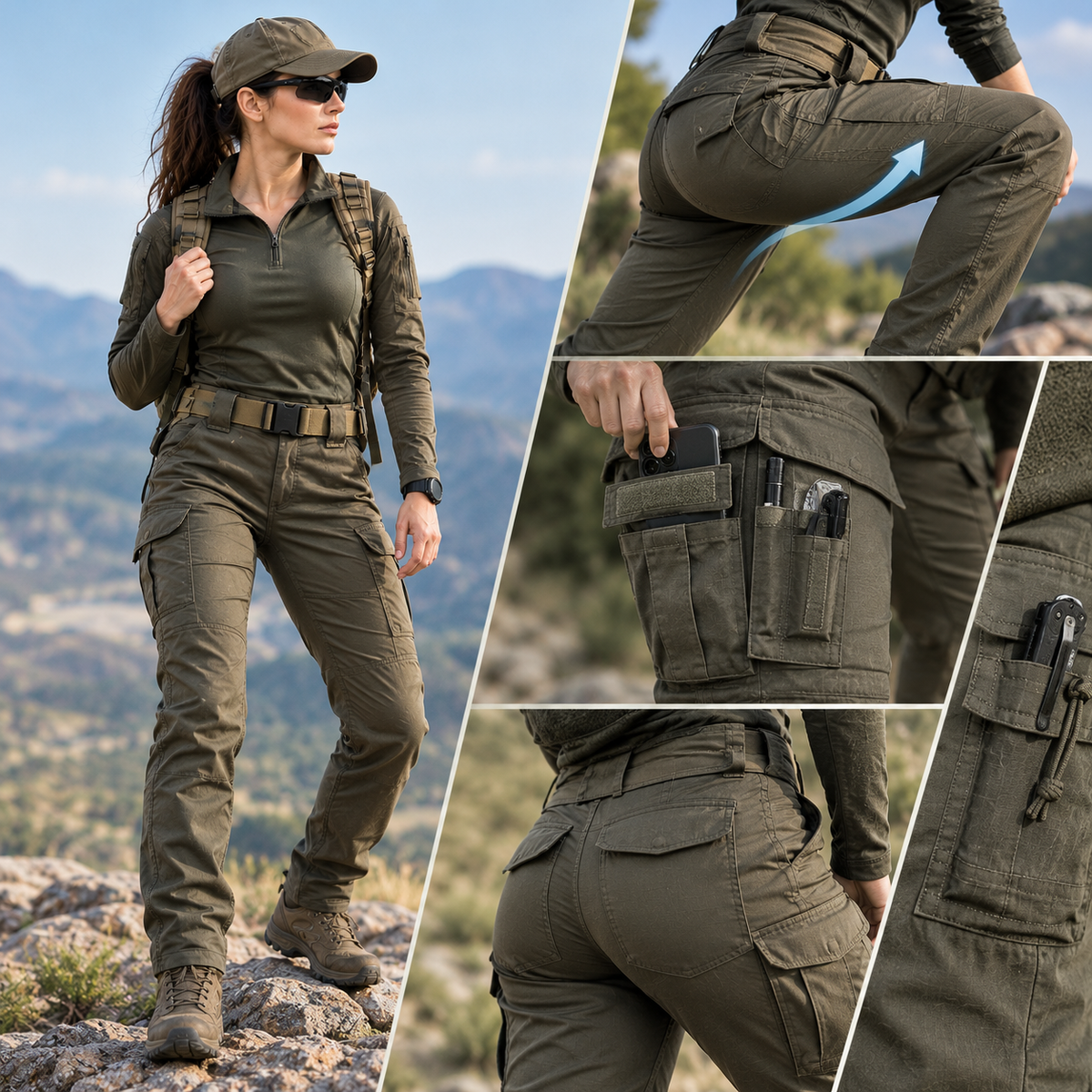
2:-4-way stretch gives in both directions. It is most useful in high-movement zones like the crotch, where you lunge, climb and step up high.
For women, targeted stretch through the hips, seat and thighs is often the difference between pants that fit at your true size and pants you have to size up in.
Ripstop vs Canvas: Which Is More Durable?
Canvas resists surface abrasion better, while ripstop resists tears better for its weight. If your work means kneeling on concrete or sliding across rough surfaces all day, canvas lasts longer at the knees and seat. If your work means snags, brush and quick movement, ripstop holds up well and stays lighter.
For most duty roles, durability depends just as much on construction. Reinforced knees, a stretch crotch panel or gusset, and strong belt-loop stitching often decide when a pair wears out, whichever fabric it uses.
Which Fabric Is Best for Your Role and Climate?
Match the fabric to how you move and where you work:
|
Role or condition |
Recommended fabric |
Why |
|
Patrol, EMS, active security |
Stretch poly-cotton ripstop |
Mobility for kneeling and vehicle entry, lighter weight, faster drying |
|
Corrections, long hours on foot |
Stretch ripstop or stretch twill |
Comfort through long shifts, holds a neat appearance |
|
Construction, factory floor |
Canvas or heavy ripstop |
Abrasion resistance on rough surfaces |
|
Hot, humid climates |
Lightweight poly-cotton or nylon ripstop |
Breathes and dries quickly |
|
Cold weather, static posts |
Canvas or heavier ripstop |
Warmer, more wind resistance |
|
Desk-to-field roles |
Stretch blend |
Comfortable sitting, ready to move |
If you work in the fire service, check your department's station wear requirements before you buy. Standard tactical pants are not flame-resistant, and some departments require station uniforms that meet specific standards. Our guide to women's duty pants for law enforcement, EMS and fire covers role-specific needs in more detail.
How Fabric Affects Fit for Women
Fabric and fit work together. A rigid fabric cut on a straight pattern has to be sized up to clear the hips and seat, which leaves a gap at the waist and extra fabric in the legs. A stretch blend cut on a women's pattern can fit the waist and the hips at the same size, because the fabric gives where your body needs room to move.
That is one reason so many women struggle with duty pants, a problem we explore in why finding women's tactical pants that actually fit is so hard. The right fabric does not fix the wrong pattern, but the right pattern needs a fabric that moves.
How to Read a Tactical Pants Fabric Label
The label tells you more than the product name. Look for four things:
1:-Fiber percentages. A typical duty blend lists polyester, cotton and a few percent of spandex. More polyester usually means faster drying and better color retention; more cotton means a softer, more breathable feel.
2:-Weave. Look for "ripstop," "canvas" or "twill." If the weave is not named, check the product photos for the ripstop grid.
3:-Stretch type. "2-way," "4-way" or "mechanical stretch" tells you how and where the pants give.
4:-Finish and care. A water-repellent or stain-resistant finish helps with rain and spills. Care instructions tell you how to keep that finish and the stretch working.
What MGT Gear Uses and Why
MGT Gear's Women's Tactical Pants use a 51% polyester, 44% cotton and 5% spandex ripstop. The body has durable 2-way stretch, and a 4-way stretch crotch panel gives the hips, seat and thighs room to bend and climb. A water-repellent treatment is designed to perform for more than 100 washes.
We chose a stretch poly-cotton ripstop because it balances what women in duty roles need: tear resistance for real work, breathability for long shifts, and stretch that lets the pants fit a woman's body without sizing up. Care is simple: machine wash cold, machine dry low, no bleach and a warm iron if needed. You can compare our styles in the women's duty pants collection.
Frequently Asked Questions
Are water-repellent tactical pants waterproof?
No. A water-repellent finish sheds light rain, splashes and spills, but the fabric will soak through in heavy rain. Water-repellent pants also do not protect against blood, body fluids or chemicals.
Does spandex wear out in tactical pants?
Spandex can lose recovery over time, especially with high heat and bleach. Following the care label, usually a cold wash and a low dryer setting, helps the stretch last.
Is nylon or polyester better for tactical pants?
Both are strong and dry quickly. Nylon is often a bit stronger and lighter but can feel slick and noisy. Polyester blended with cotton is the most common duty choice because it balances durability with a softer, more breathable feel.
Is heavier fabric always more durable?
Not always. Heavier fabric resists abrasion, but construction details like reinforced knees, a crotch panel or gusset and strong stitching often decide how long pants last. Heavier fabric also runs hotter.
What is mechanical stretch?
Mechanical stretch comes from how the yarn is twisted and woven rather than from spandex. It adds give without elastic fibers. Many duty pants combine mechanical stretch with a small amount of spandex.
Choose the Fabric That Works Your Shift
There is no single best fabric for every job, but for most women in duty roles a stretch ripstop blend gives the best mix of durability, comfort and fit. Choose canvas when abrasion is your biggest enemy, and lighter ripstop when heat is.See the fabric, stretch and fit details on MGT Gear's Women's Tactical Pants, built in stretch ripstop and patterned for women from the start. Eligible returns are accepted within 30 days, so you can test how the fabric moves on your next shift.

Leave a comment
This site is protected by hCaptcha and the hCaptcha Privacy Policy and Terms of Service apply.